
Saiq-ka and Everyday Transport: The Journeys Between Home and Town
A bicycle with a passenger carriage on one side, a crowded bus, a motorbike weaving through traffic — Myanmar's daily journeys are made of small, practical choices about how to get from home to town and back again.
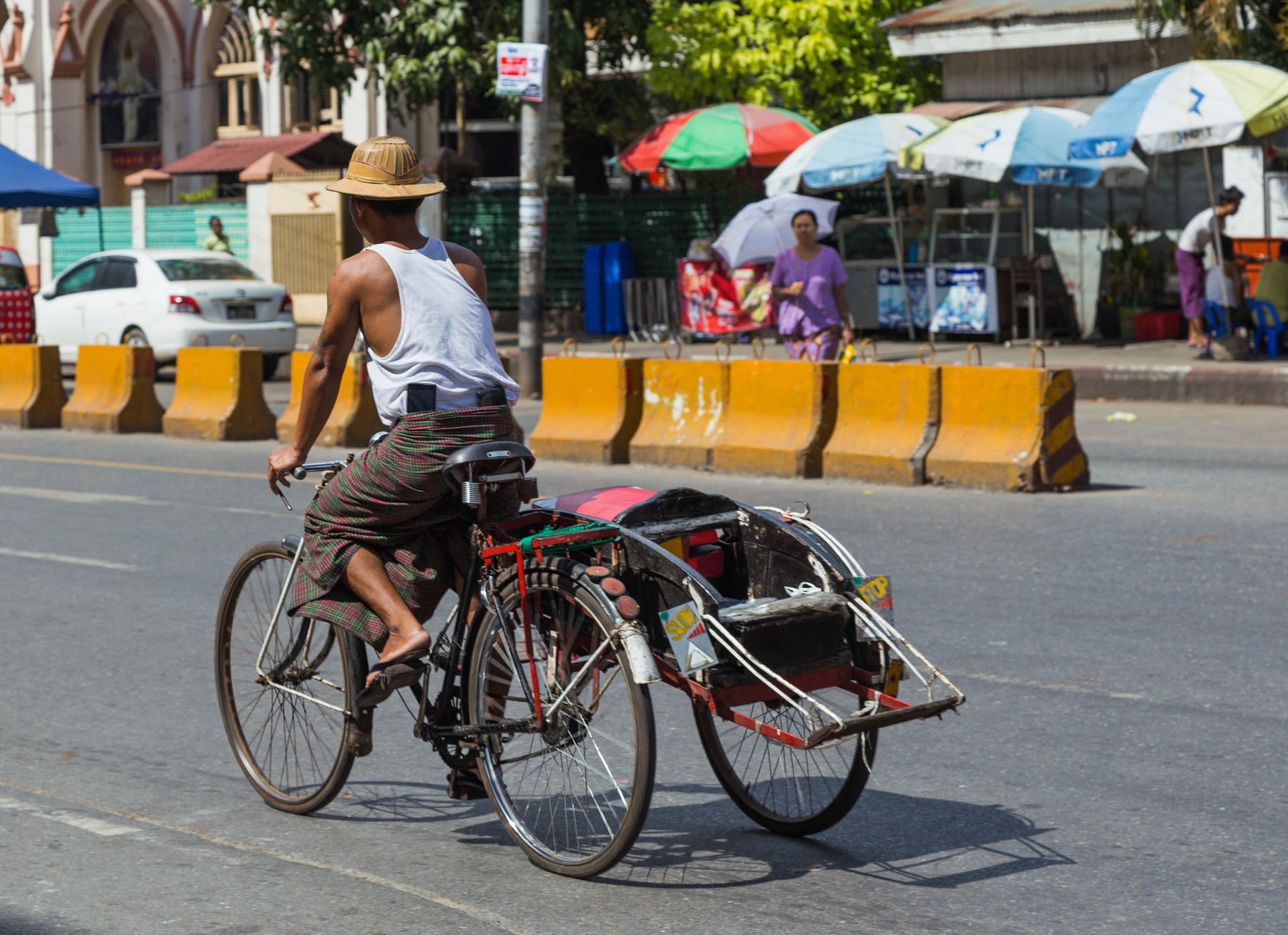
A bag of vegetables beside a passenger’s feet. A schoolbag resting on a lap. A driver leaning forward as he pedals into the afternoon heat.
The saiq-ka is a familiar part of Myanmar’s street life: a bicycle with a passenger carriage attached to one side. Its name, ဆိုက်ကား, comes from the English word “sidecar.” Small enough to move through neighbourhood lanes, it has long carried people and goods on journeys too far to walk comfortably, but too short to need a car.
Alongside buses, motorcycles and shared pickups, it tells a story about how daily life gets done. Going to work, collecting children, bringing purchases home: ordinary journeys that keep a town moving.
A small vehicle with a long history
Saiq-ka have been part of Myanmar’s towns and cities since at least the 1930s. Their practical design gave them a lasting place around markets and residential streets, where passengers and parcels needed to travel short distances. Some drivers owned their vehicles; others rented them to earn a daily income.
The passenger sits beside the person pedalling, close enough for a conversation. On many traditional models, two passenger seats face in opposite directions. There is little separation from the street: the sounds of shops, the smell of cooking and the unevenness of the road are all part of the journey.
Its usefulness lies in that simple arrangement. A saiq-ka can take someone home with heavy shopping or carry goods along a lane where a larger vehicle would struggle. A 2015 study of Myanmar’s trishaw operators documented their role in narrow markets and neighbourhoods, including short trips connecting passengers with nearby bus stops.
The familiar driver at the corner
For regular passengers, the relationship can extend beyond a single fare. A driver may become the person a family calls for a school journey or a shopkeeper contacts when goods need collecting.
That familiarity has also adapted to technology. The same 2015 study found that mobile phones helped drivers arrange pickups and maintain relationships with regular customers. A vehicle powered by pedals could still find its next passenger through a phone call.
There is a personal quality to these arrangements. The destination is discussed directly, and the fare is generally agreed before setting off. A nearby market, a familiar shop or a street corner may be as useful as a formal address.
These small exchanges belong to everyday life as much as the vehicle itself. They depend on recognition, local knowledge and the trust built through repeated journeys.
When the journey needs a bus
A saiq-ka serves the neighbourhood. A bus carries people across a much larger stretch of the city.
In Yangon, buses bring together the routines of students, office workers, shop staff and market traders. The journey includes more than time on board: there is the walk to the stop, the wait, the search for the right route and, sometimes, a transfer before reaching home.
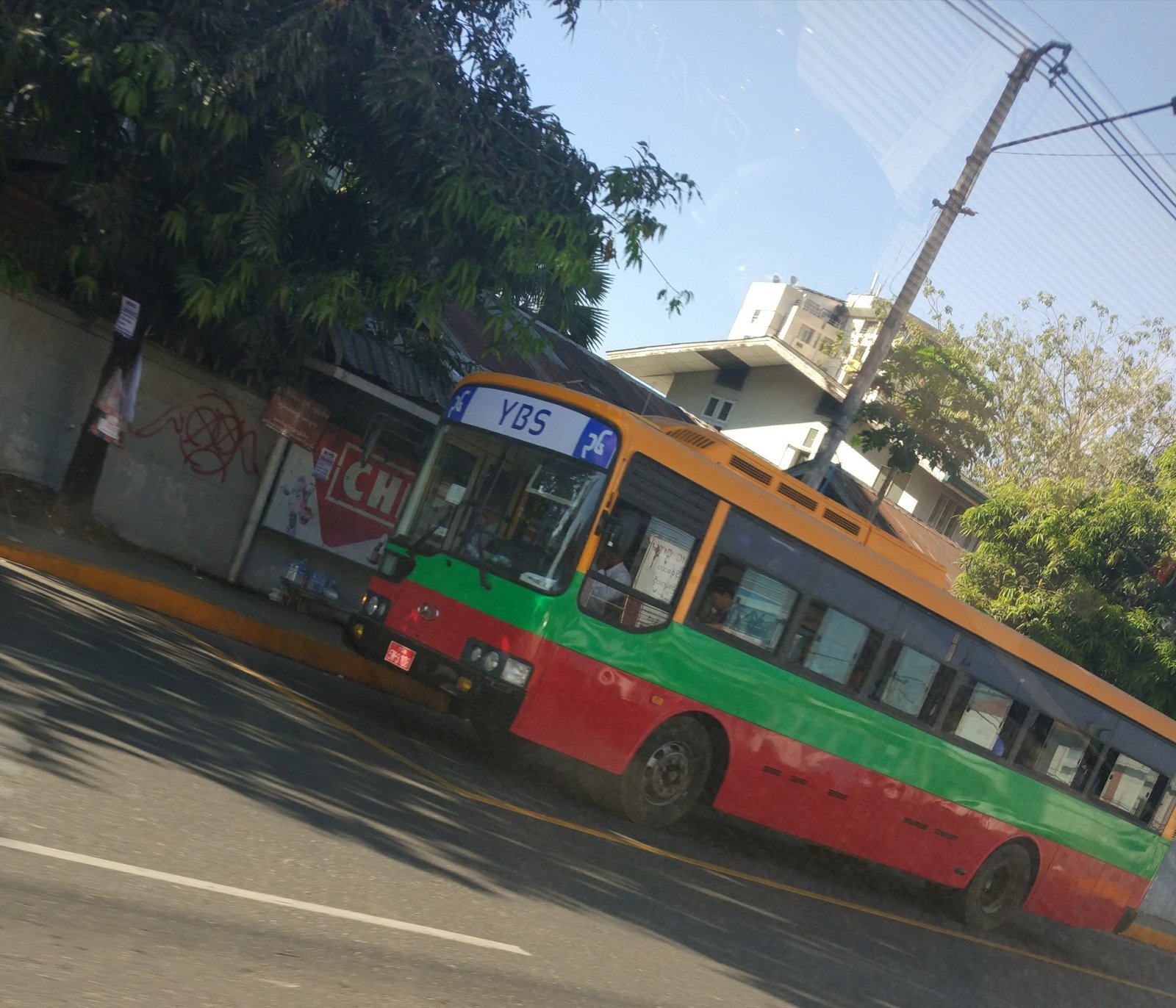
The Yangon Bus Service, commonly known as YBS, began operating in 2017 as part of a reform of the city’s bus network. It marked an important change in how Yangon organised its public transport.
For passengers, however, the questions remain practical. Does this bus pass the destination? How long will the trip take? Is there room to get on?
A bus ride has its own small acts of consideration: making space near the door, offering a seat to someone who needs it, or helping another passenger work out where to get off. Not every journey is comfortable or patient, especially in a crowded vehicle. But sharing limited space is part of the daily experience.
Different places, different ways of moving
Myanmar does not have one transport rhythm.
Yangon’s busy bus routes differ from Mandalay’s streets, where motorcycles have become central to everyday travel. A World Bank study published in 2020 described Mandalay’s transition from a city strongly associated with bicycles to one dominated by motorbikes.
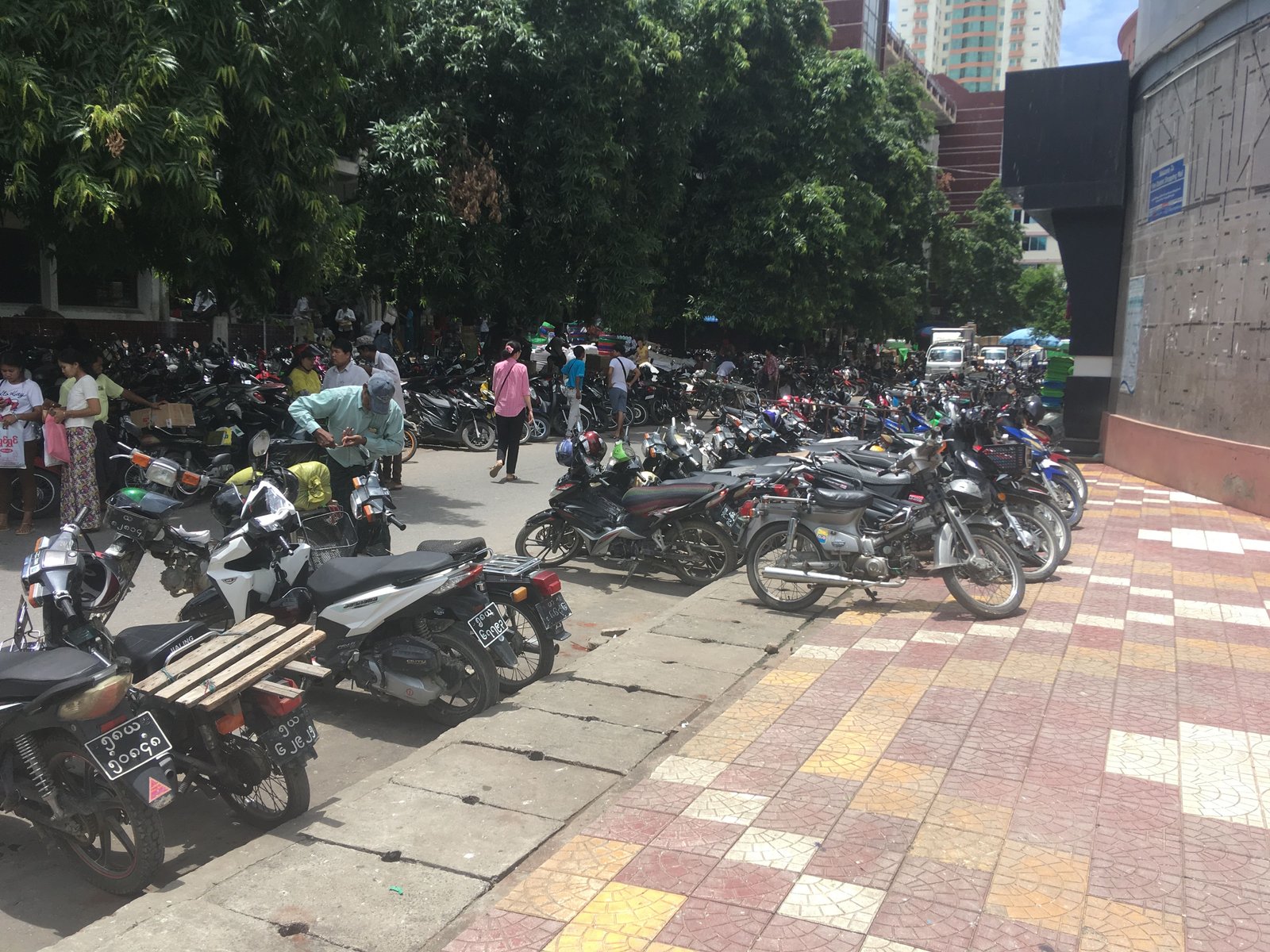
Elsewhere, shared pickups, motorcycle taxis and small three-wheelers form different combinations according to the roads, distances and services available. Walking remains part of the journey, whether it connects a house to a main road or a bus stop to a workplace.
A single trip may involve several of these. What looks like a short distance on a map can mean walking, waiting and changing vehicles, especially when carrying shopping or travelling with children.
The work behind the ride
From the passenger’s seat, a saiq-ka ride may feel unhurried. For the driver, it is physical work.
Pedalling with passengers or a heavy load requires strength, particularly in heat and rain. Waiting for customers brings no guaranteed income, while tyres, chains and other parts still need attention. Reporting on Yangon’s drivers has also documented the mechanics whose repair work keeps these vehicles on the road.
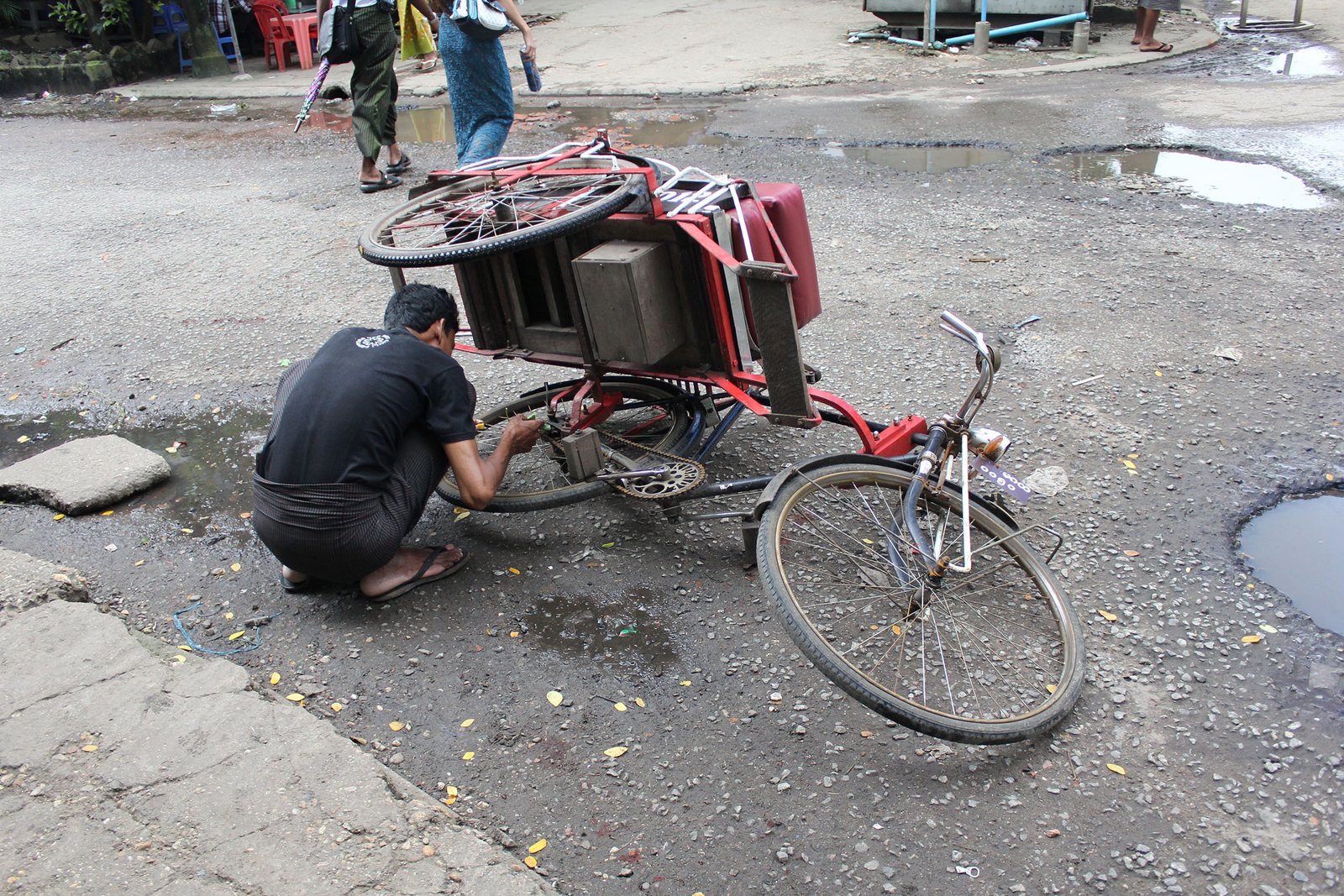
It is easy to admire a saiq-ka as a charming feature of an older streetscape. Looking more closely means recognising the labour behind it. The person pedalling is earning a living, with household expenses waiting at the end of the day.
Agreeing on a fair fare and allowing time for the journey are simple ways to respect that work.
Getting around today
Everyday travel now takes place under considerable pressure. In its September 2026 transport update, the World Bank described how conflict, disrupted routes and higher fuel costs were making the movement of people and goods more difficult and expensive. These pressures also affect household budgets through the cost of food and other necessities.
The situation varies across the country. A familiar route may be affected differently from one town to another, and transport availability cannot be assumed to remain the same.
A pedal-powered saiq-ka does not need petrol, but its driver still lives within this wider economy. Higher living costs matter even when the vehicle itself runs on human effort.
For passengers, the decision may come down to a small calculation: walk a little farther, wait for a bus, or pay for a ride that makes carrying a heavy bag possible.
The journey home
By late afternoon, the direction of travel begins to reverse. People leave workplaces, collect children and carry the day’s purchases home. Buses fill, and shorter journeys continue along neighbourhood streets.
The saiq-ka belongs within this everyday movement. Its importance is found in the practical things it makes possible: a parcel delivered, shopping brought home, a passenger spared a difficult walk.
To understand a town, it helps to notice how people move through it — and the people whose work gets them there.
Sources
- Ling, Oreglia, Aricat, Panchapakesan & Lwin — The Use of Mobile Phones Among Trishaw Operators in Myanmar (International Journal of Communication, 2015)
- World Bank — Urban Transport in Yangon and Mandalay: Review of Sector Institutions, Expenditures, and Funding (2020)
- Yangon Bus Service (Wikipedia)
- World Bank — Disrupted Connectivity, Disrupted Livelihoods: How Myanmar's Transport and Logistics System Is Adapting Under Pressure (September 2026)